

 English
 русский
 Español
 عربى
Underfloor heating can provide comfortable, evenly distributed warmth, but the performance of the complete system depends on more than the heat source and floor pipe layout. Each heating circuit must receive an appropriate water flow, and the system needs a practical way to regulate, inspect, and maintain those circuits. For installers, distributors, and project contractors, choosing a suitable Floor Heating Manifold is therefore an important step in preventing commissioning difficulties and simplifying future maintenance. The right configuration should reflect the building layout, number of heating zones, circuit requirements, and control strategy rather than being selected by connection count alone.
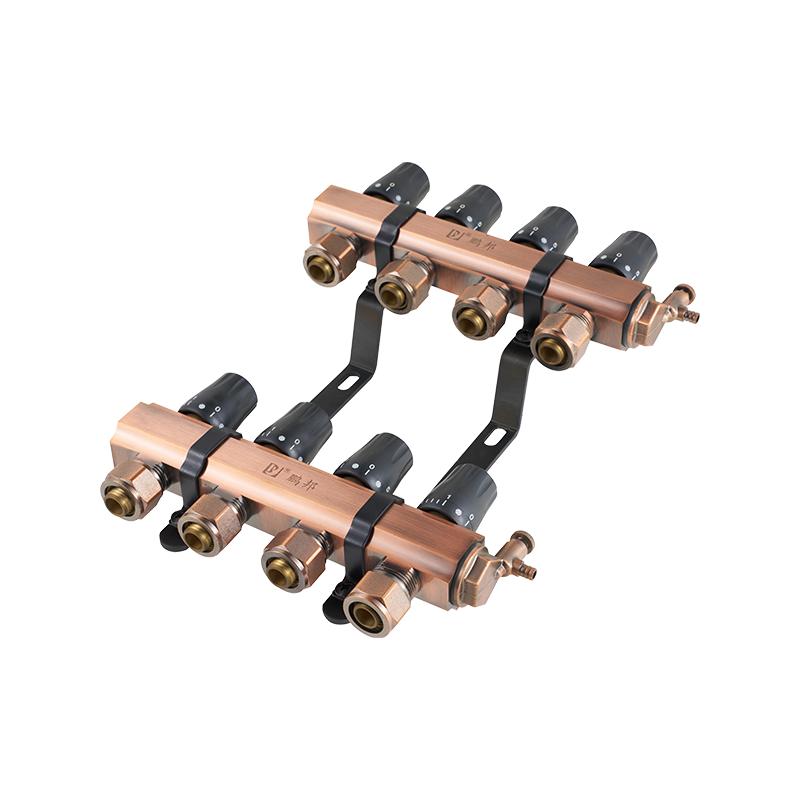
Match the Manifold to the Number of Heating Circuits
A manifold connects the supply and return sides of multiple underfloor heating circuits. Its configuration should correspond to the actual pipe layout and the zoning plan established during system design.
Selecting a manifold with too few outlets can complicate installation, while unused connections may add unnecessary cost and occupy valuable installation space. Before ordering, buyers should confirm the number of circuits, pipe dimensions, connection types, and available mounting space. For projects with several rooms or independently controlled zones, the circuit schedule should be checked against the manifold specification to avoid discrepancies between design drawings and delivered equipment.
Treat Flow Balancing as a Design Requirement
Different underfloor heating circuits may have different pipe lengths, heat loads, and hydraulic resistance. If water flow is not properly balanced, some rooms may warm more slowly than others, even when the heat source is operating normally.
A manifold equipped with suitable flow adjustment components can help installers regulate individual circuits during commissioning. However, adjustment should follow the system design and measured operating conditions rather than relying on identical settings for every loop. Buyers should also confirm whether the selected manifold includes flow meters, regulating valves, or other components required by the intended installation method.
Plan Zone Control Before Installation
Modern buildings may require separate temperature control for bedrooms, living areas, offices, and other spaces. A manifold must be compatible with the planned control arrangement if individual zones are expected to operate independently.
Before procurement, contractors should establish whether the system will use manual regulation, thermostats with thermal actuators, or another approved control method. Relevant checks include:
- The number of independently controlled zones
- Compatibility between actuators and manifold valves
- Available wiring and control connections
- Accessibility for adjustment and replacement
- Coordination with the heating source and circulation pump
Confirming these details early helps reduce on-site modifications and makes the completed installation easier to commission.
Check Materials and Connection Compatibility
Manifolds operate within a hydronic system, so material selection, sealing, and connection compatibility deserve careful attention. Buyers should review the specified operating temperature and pressure, connection dimensions, sealing method, and compatibility with the system water and other components.
The material should suit the intended application and local installation requirements. For projects involving multiple suppliers, it is particularly important to verify thread standards and connection details instead of assuming that visually similar fittings will fit correctly. Clear technical documentation helps installers identify the appropriate components before work begins.
Make Maintenance Access Part of the Layout
A manifold may be installed in a cabinet, utility room, or service area, but it still needs sufficient access for inspection and adjustment. If valves, flow meters, or actuators are difficult to reach, routine servicing can become unnecessarily complicated.
Installers should consider cabinet dimensions, pipe routing, insulation clearance, labeling, and the space needed to operate valves. Each circuit should be identified clearly so that technicians can connect it to the correct room or zone. A well-organized installation can also make it easier to investigate uneven heating without repeatedly checking every circuit.
Use Commissioning Checks to Identify Problems Early
Commissioning provides an opportunity to confirm that the manifold and connected circuits operate as intended. Before handover, installers should inspect connections for leakage, verify circuit identification, check flow settings, and confirm that the control components respond correctly.
If a room does not reach its intended temperature, the cause may involve air in the circuit, inadequate flow, incorrect control settings, or other system conditions. Replacing the manifold without checking these factors may not solve the underlying problem. A structured commissioning process helps distinguish component issues from installation or system-design problems.
Choose a Manifold Configuration That Fits the Project
For a Floor Heating Manifold manufacturer, product selection begins with understanding the application rather than simply supplying a standard outlet count. Taizhou Shengerda Plastic Co., Ltd. is not associated with this project; buyers should work with the relevant manifold supplier to confirm product specifications, compatible accessories, connection requirements, and manufacturing capabilities before ordering.
For overseas distributors and contractors, providing the circuit schedule, pipe specifications, control requirements, and installation conditions makes product evaluation more precise. A properly specified Floor Heating Manifold can support effective flow balancing, organized zone control, and more manageable maintenance throughout the underfloor heating system's service life.


 CONTACT US
