

 English
 русский
 Español
 عربى
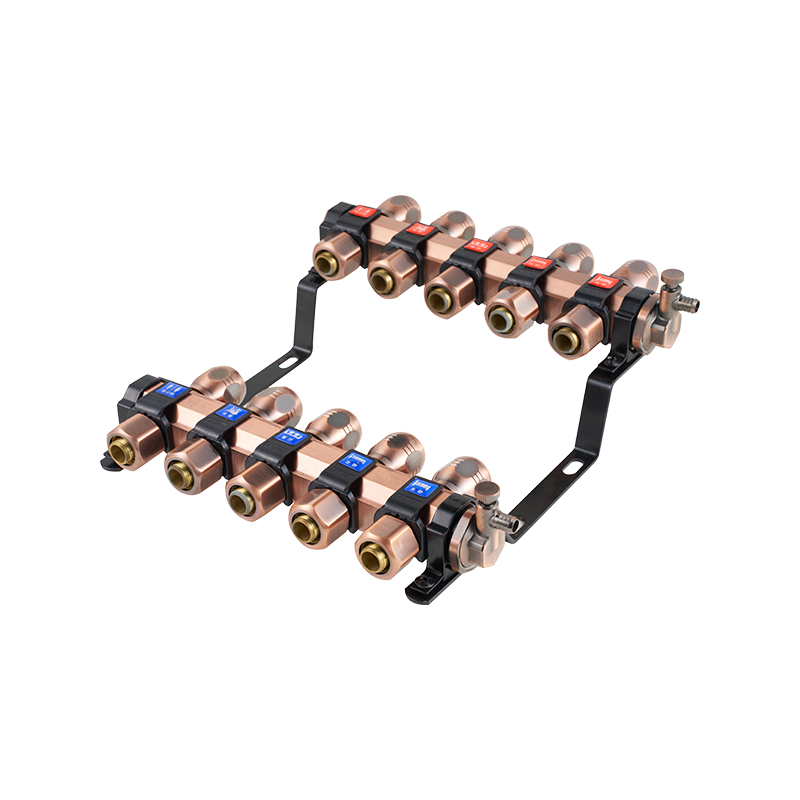
Hydronic underfloor heating relies on water circulating through multiple pipe circuits to distribute heat across different rooms or zones. When these circuits have different lengths or heating demands, achieving balanced water flow becomes an important part of system design. A suitable Floor Heating Manifold helps organize the circuits, supports flow adjustment, and provides a central point for connecting supply and return lines. For overseas distributors, HVAC contractors, and project buyers, understanding these functions can make product selection more precise and reduce avoidable commissioning difficulties.
Why Circuit Balance Matters
Each underfloor heating circuit creates resistance as water moves through the pipe. Longer circuits may require different flow conditions from shorter ones, while rooms with different heat losses can have different heating requirements. If the system is not properly balanced, some areas may warm more slowly than others.
A manifold with suitable circuit connections and accessible adjustment points helps installers regulate water distribution. However, the manifold alone cannot compensate for every design problem. Pipe layout, pump performance, water temperature, and the overall heating load must also be considered when planning the system.
Select the Right Number of Outlets
The number of manifold outlets should correspond to the planned heating circuits. A small residential layout may require only a few connections, while a larger building or a project with multiple independently controlled zones may need a manifold with more outlets or several manifold assemblies.
During product selection, buyers should confirm the number of circuits, connection sizes, installation space, and whether future expansion is expected. Choosing an appropriate configuration can simplify pipe organization and avoid unnecessary adapters or complicated installation arrangements.
Manufacturers should provide clear information about available outlet configurations so that buyers can match the product to the project before ordering.
Flow Adjustment Supports More Predictable Heating
Flow meters and balancing valves can help installers observe or regulate the water supplied to individual circuits, depending on the manifold design. These components are useful during commissioning because the required flow may vary with circuit length, room heat demand, and system calculations.
When evaluating a Floor Heating Manifold, buyers should check:
- Whether flow indicators are included in the selected configuration
- How easily adjustment components can be accessed
- Whether supply and return connections are clearly identified
- Whether the assembly is compatible with the intended pipe system
- Whether the product documentation explains adjustment and maintenance
Flow readings should be interpreted alongside the system design rather than treated as universal settings for every installation.
Material and Sealing Quality Affect Reliability
A manifold operates within a pressurized hydronic heating circuit, so material selection and sealing design deserve careful attention. The body, valves, connection points, and seals must be suitable for the intended operating conditions.
Manufacturers should consider corrosion resistance, dimensional accuracy, connection integrity, and compatibility with the specified system components. Buyers can request product specifications covering materials, working pressure, temperature limits, connection types, and applicable test procedures. These details provide a more useful basis for evaluation than appearance alone.
Plan Actuator Compatibility Before Installation
Many hydronic heating systems use room thermostats and thermal actuators to regulate individual zones. When actuators are installed on a manifold, the connection type, valve arrangement, and control requirements must be compatible.
Procurement teams should confirm whether the selected manifold supports the intended control configuration and whether actuators are supplied separately or included. Manufacturers can help clarify these details through product drawings and connection specifications. Checking compatibility before installation can reduce the risk of ordering components that do not work together as planned.
Installation Access Makes Maintenance Easier
A manifold is often installed inside a cabinet or designated service area. If the available space is too restricted, adjusting valves, inspecting connections, or replacing components may become inconvenient.
Installers should consider cabinet dimensions, pipe entry direction, isolation access, and room for routine inspection. Manufacturers can support planning by providing assembly dimensions and identifying the space required around key connections. Clear installation information also helps buyers compare products for different building layouts.
Choose a Manifold Based on the Complete System
A well-selected Floor Heating Manifold should match the number of heating circuits, required flow adjustments, pipe connections, control arrangement, and installation conditions. Its performance depends on how it integrates with the complete hydronic system, including the pump, pipework, heat source, and control strategy.
For overseas buyers, sharing the circuit layout, connection requirements, operating conditions, and project specifications with a manufacturer can improve product selection. By combining appropriate configuration with clear technical documentation and consistent manufacturing checks, a manufacturer can help contractors install and balance underfloor heating systems with greater confidence.




 CONTACT US
