

 English
 русский
 Español
 عربى
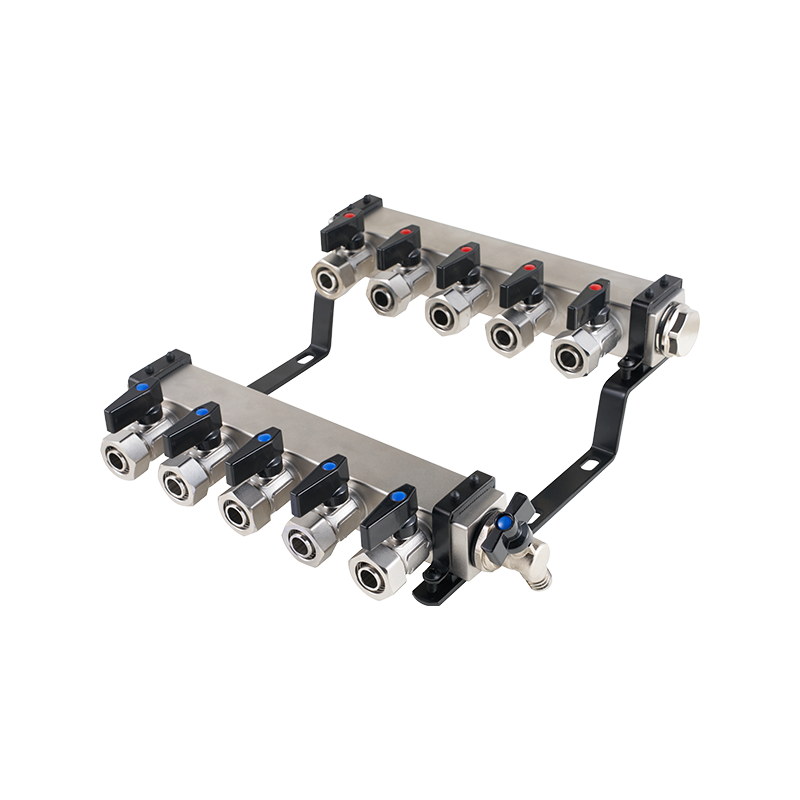
عربىStable water circulation is essential for maintaining consistent heating performance in hydronic systems. A specialized Floor Heating Manifold Factory pays close attention to internal filtration because small particles present in circulating water can directly affect flow stability and component lifespan. Integrating a Filter Ball Valve into the manifold assembly helps capture debris before it enters sensitive passages, valves, and flow meters. This design approach supports smoother hydraulic operation, reduces the likelihood of internal blockages, and allows the heating system to maintain predictable performance throughout seasonal operation.
Contaminants in Heating Systems Are More Common Than Expected
Even closed-loop floor heating systems are not completely free from contaminants. During installation, small particles such as metal shavings, pipe fragments, sealing tape residue, and dust may enter the piping network. Over time, internal corrosion, scale formation, or mineral deposits can also develop, especially in systems filled with untreated or hard water.
When these particles circulate through the manifold, they can accumulate in narrow channels or valve seats. Because floor heating systems often rely on precise flow adjustment, even minor obstructions can alter water distribution between loops. Internal filtration helps capture these particles before they interfere with flow control components.
Factories recognize that preventing contamination at the manifold level is more effective than attempting to correct flow problems after installation. By incorporating filtration directly into the system structure, manufacturers support long-term hydraulic consistency.
Why the Filter Ball Valve Is Positioned Strategically
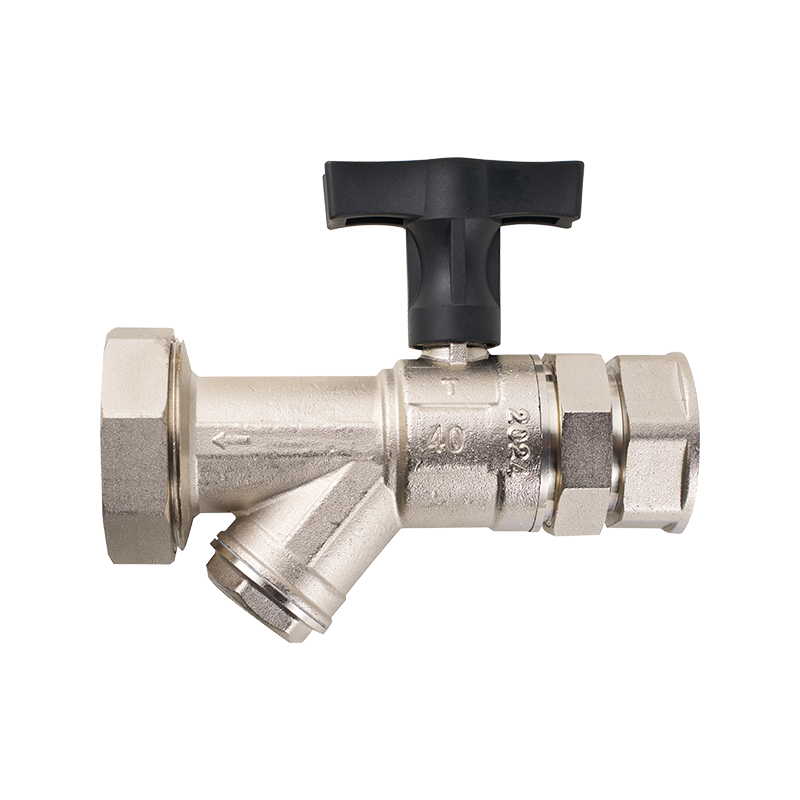
The Filter Ball Valve serves both as a shut-off mechanism and as a filtration point within the heating system. Its placement is carefully considered to intercept debris before water enters critical flow regulation areas.
Several practical reasons explain this positioning:
- Protection of flow meters and balancing valves
Flow meters rely on smooth water movement to provide accurate readings. Filtration prevents debris from interfering with their internal mechanisms.
- Prevention of internal channel blockage
Manifold passages are designed with controlled diameters. Capturing debris early reduces the risk of partial obstruction that could affect individual loop performance.
- Support for stable valve operation
Balancing valves and adjustment components depend on clean sealing surfaces. Filtration helps maintain smooth adjustment without resistance caused by debris buildup.
- Simplified system maintenance
Filter Ball Valve assemblies allow technicians to isolate and clean filters without draining the entire system, making maintenance procedures more manageable.
This combination of isolation and filtration functions helps preserve the structural and operational integrity of the manifold.
Internal Filtration Helps Maintain Balanced Flow Distribution
Flow balance is essential in floor heating systems because each circuit may vary in length, elevation, and resistance. If debris accumulates unevenly, certain loops may receive less water flow while others receive more. This imbalance can result in temperature variations across different floor areas.
Internal filtration helps maintain uniform circulation by preventing particles from altering internal resistance. When water channels remain clean, flow adjustments made during system setup remain consistent over time. This allows heating zones to perform according to their original configuration.
Factories that integrate filtration into manifold assemblies help reduce the likelihood of gradual performance drift caused by contaminant accumulation.
Protection of Precision Components Inside the Manifold
Modern manifolds include several precision-machined components such as valve seats, adjustment stems, seals, and flow indicators. These parts operate within small tolerances to allow controlled water regulation.
Particles suspended in circulating water can affect these components in several ways:
- Abrasion of sealing surfaces may reduce valve tightness
Debris may lodge between adjustment threads, affecting smooth operation
- Flow meter floats may become restricted, affecting visual readings
Internal corrosion may accelerate if particles promote localized deposits
- Manufacturing Perspective: Why Factories Integrate Filtration at the Source
From a manufacturing standpoint, integrating filtration directly into the manifold assembly helps ensure predictable system performance across different installation environments. Heating systems may be installed in new buildings, renovations, or older infrastructure where pipe cleanliness varies.
Factories design manifolds with built-in filtration to accommodate these varying conditions. This approach allows the manifold to function properly even when initial system cleanliness is not fully controlled.
Internal filtration also supports quality consistency. When manifolds include integrated Filter Ball Valve assemblies, manufacturers can deliver products designed to operate under practical field conditions rather than relying solely on external filtration equipment.
This design philosophy focuses on supporting real-world installation scenarios rather than depending entirely on ideal system preparation.

 CONTACT US